Encounter Landscapes That Have Inspired American Artists
April 10, 2026Even if you’ve never so much as doodled, you’ll see why these sites have stirred creative hearts for generations.
With its storied fishing fleet and striking downtown skyline, Gloucester Harbor has appeared in thousands of paintings and photographs, most famously during the peak years of American Impressionism from the late 1880s through the 1910s. Noted examples, several of which are exhibited in the Cape Ann Museum, include Frank Duveneck’s Horizon at Gloucester (1905), which captures the harbor panorama from Eastern Point, and Fitz Henry Lane’s Gloucester from Rocky Neck (1844).
Perhaps no artist is more closely associated with the area than Lane, who resided in an imposing Gothic Revival stone house on Rocky Neck, a craggy peninsula of Gloucester that juts into the harbor and supports one of the nation’s longest-running art colonies. Luminaries such as Milton Avery, Mark Rothko, and Nell Blaine also practiced their craft there, and today artists are still enchanted by the same scenes.
Out of the waters west of Rocky Neck rises Ten Pound Island, the subject of several works by Winslow Homer, who painted some of his dramatic breeches-buoy rescue scenes while living on the island. Across Gloucester, on the eastern shore, Childe Hassam painted Top of Cape Ann (1918), showing two nude women sunbathing at Bass Rocks, which is also the site seen in Edward Hopper’s celebrated watercolor Gloucester Beach, Bass Rocks (1924).
On the north shore of Gloucester, idyllic Annisquam captivated a multitude of painters including Postimpressionist Maurice Prendergast, who created several watercolors between 1915 and 1925 depicting locals in colorful swimsuits cavorting against a backdrop of bathhouses and cottages.
In central Cape Ann, wooded trails snake through the eerie, long-abandoned colonial settlement of Dogtown. It was captured on canvas by John Sloan (Dogtown, Ruined Blue Fences, 1916) and in several works by Marsden Hartley that focus on the area’s massive granite boulders, which led the artist to describe the scenery as “a cross between Easter Island and Stonehenge.”
Now flooded with water, the former granite quarry at Rockport’s Halibut Point State Park caught the eye of Abstract Expressionist Jan Matulka, who presents it in an almost Cubist style in Rockport Quarry (1929). Leon Kroll celebrates sunlight reflecting off its jagged, rocky shoreline in Babson Farm Quarry, Halibut Point (1913). Not far to the south is Bradley Wharf and the iconic red fishing shack rendered in artworks so many times it earned the moniker Motif Number 1.
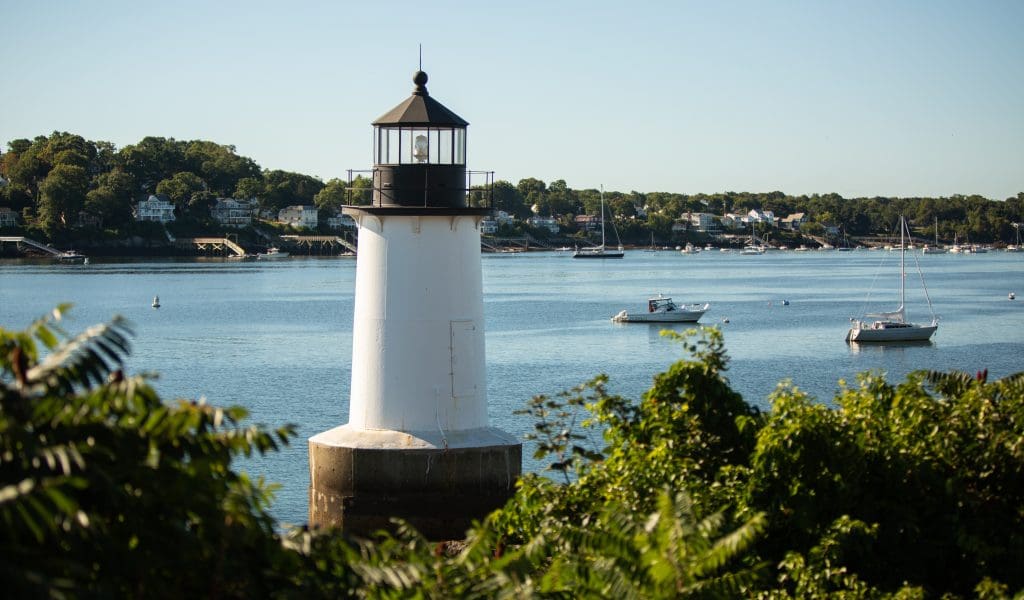
Salem’s waterfront has witnessed mariners setting off on or pulling in from nautical voyages for three centuries. Viewed from Winter Island Park, scenes of schooners and sloops have been immortalized in brushstrokes by scores of artists, including Fitz Henry Lane in his fanciful 1853 oil painting Salem Harbor.
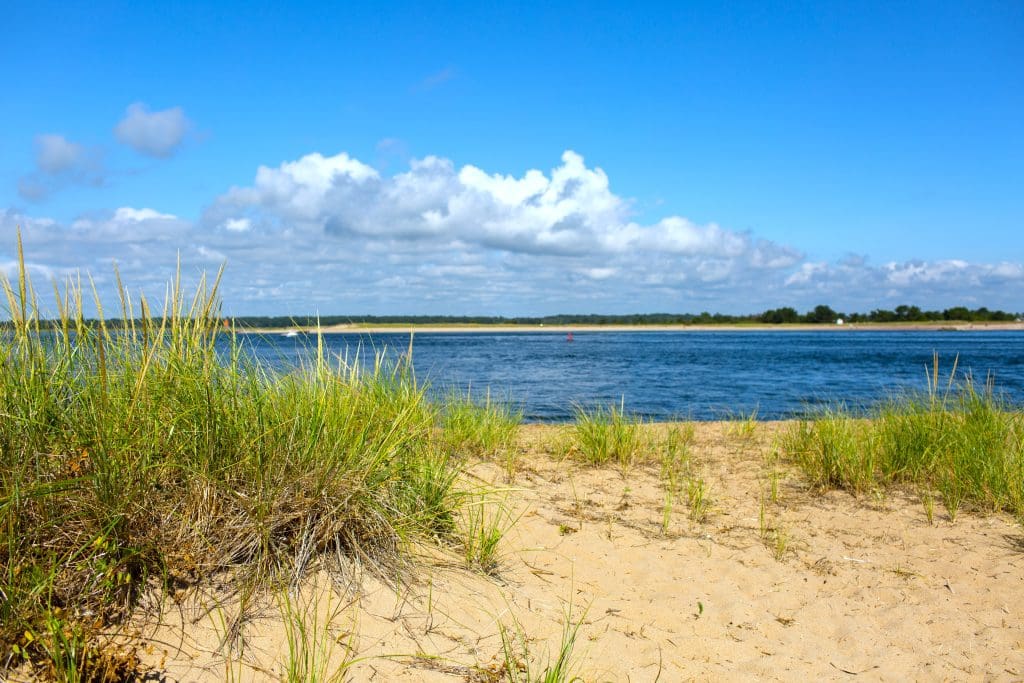
On Plum Island, just off the coast of Newbury, Parker River National Wildlife Refuge preserves a pristine expanse of windswept dunes and migratory-bird habitats. The seeds of numerous late-19th-century landscape paintings by American Impressionist and Amesbury native Charles Harold Davis were planted here.
*
This blog is an excerpt from our digital guide “250 Ways to Explore, Discover, and Celebrate North of Boston”. To view the full guide, click here.